KAWASAKI ML5EXEN11NDA49821 Frame Chassis Wa Bos
fits model: Ex650, Ex, 650, Ninja. make: Kawasaki. year: 2020–2025.
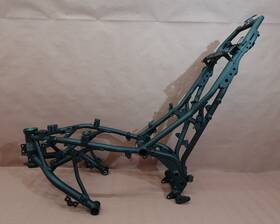
( Manufacturer Part Number: ML5EXEN11NDA49821 ), ( Part Type: Frame ), ( Country Of Origin: Japan )
Review KAWASAKI Main Frame Chassis Wa Bos fits NINJA EX650 EX 650 2020–2025
The **Kawasaki Ninja EX650 (ML5EXEN11NDA49821, 2020 2025 model years)** represents a refined fusion of sportbike agility and adventure-ready versatility, engineered to deliver an exhilarating yet practical riding experience for both urban commuters and weekend explorers. Built upon a **high-strength, lightweight frame chassis** a combination of **aluminum and steel components** this motorcycle strikes an ideal balance between rigidity for precise handling and flexibility for comfort over varied terrain. The **double-cradle frame** is designed with precision, featuring a **steel backbone and aluminum subframes** that enhance durability while reducing weight, ensuring a nimble yet stable platform that responds effortlessly to rider input. The **twin-spar aluminum front frame** integrates seamlessly with the rear subframe, creating a cohesive structure that optimizes weight distribution and torsional stiffness, crucial for both high-speed stability and sharp cornering.
At the heart of the Ninja EX650 lies a **649cc, liquid-cooled, parallel-twin engine** (designated as the **Z650 engine**) that embodies Kawasaki s signature blend of power delivery and efficiency. This engine is a masterclass in modern motorcycle engineering, featuring **direct fuel injection, a six-speed transmission with a slipper clutch**, and a **crankshaft-mounted alternator** that enhances reliability and reduces maintenance demands. The **throttle-by-wire system** with **progressive opening** ensures a smooth, linear power curve, making it equally adept at city stop-and-go traffic and spirited highway cruising. With a **maximum output of approximately 70 horsepower and 48 lb-ft of torque**, the EX650 provides a punchy, mid-range surge that accelerates with effortless enthusiasm, while its **wide powerband** ensures it remains engaging across a broad range of RPMs. The engine s compact yet robust design allows for a **low seat height (31.1 inches)** and a **sleek, aerodynamic fairing package**, further emphasizing its accessibility and sporty aesthetics.
The **chassis and suspension** of the Ninja EX650 are meticulously tuned to cater to both urban and adventure-oriented riding. The **fully adjustable 41mm inverted fork** at the front and the **single-shock rear suspension** with **adjustable preload and rebound damping** provide a responsive yet forgiving ride, absorbing bumps with ease while maintaining precise handling. The **Upside-Down (UD) front fork** not only enhances rigidity but also improves cooling efficiency, ensuring consistent performance even during prolonged rides. The **wheelbase is optimized** for a sporty stance, with a **slightly longer rear end** that promotes stability at high speeds while the **tapered A-arm rear suspension** allows for a comfortable, slightly upright riding position ideal for both city commuting and light off-road excursions. The **cast aluminum wheels** (17-inch front, 17-inch rear) are paired with **high-performance radial tires**, including the **front 120/70-17 and rear 180/55-17**, which offer a perfect blend of grip, durability, and efficiency, whether navigating wet pavement or rough gravel paths.
The **Ninja EX650 s ergonomics** are thoughtfully designed to accommodate riders of varying sizes, with a **low, sporty seat** that encourages an aggressive yet relaxed posture. The **ergonomic handlebars** are positioned for a natural grip, while the **adjustable footpegs** and **seat height** (which can be further modified with optional aftermarket solutions) ensure a personalized fit. The **instrument cluster** is a sleek, digital display featuring a **speedometer, odometer, trip meters, fuel gauge, and a digital rev counter**, all illuminated by a **backlit LCD screen** that remains readable in low-light conditions. Optional **Kawasaki s Intelligent Cooling System (ICS)** and **Kawasaki Engine Immobilizer (KEI)** add layers of convenience and security, while the **standard ABS (Anti-lock Braking System)** with **front and rear sensors** enhances safety without compromising the bike s dynamic feel. The **exhaust system** is a **catalytic converter-equipped, dual-into-single muffler** design, delivering a sporty yet refined exhaust note that complements the bike s aggressive yet approachable personality.
The **Ninja EX650 s styling** is a modern interpretation of Kawasaki s iconic sportbike heritage, blending **aerodynamic efficiency with rugged adventure appeal**. The **sharp, angular fairings** feature **integrated LED turn signals and a sleek, streamlined windscreen**, reducing drag while improving visibility. The **carbon-fiber accents** on the fairings and seat add a touch of premium sophistication, while the **matte black and metallic paint options** (including **Matte Black, Metallic Silver, and Metallic Red**) allow for a customized look. The **LED headlight** provides bright, even illumination, while the **integrated rear light and taillight** ensure compliance with modern safety standards. The **adjustable windscreen** can be removed or repositioned to suit riding conditions, offering flexibility for both city commuting and highway cruising. Overall, the Ninja EX650 exudes a **bold, sporty character** that makes it stand out in a crowded market, appealing to riders who seek a motorcycle that is as capable on the twisty backroads as it is on the daily commute.
In summary, the **Kawasaki Ninja EX650 (ML5EXEN11NDA49821, 2020 2025)** is a masterfully engineered motorcycle that bridges the gap between sportbike performance and adventure-ready practicality. Its **lightweight yet robust frame chassis**, **efficient yet engaging engine**, and **adjustable suspension** create a platform that is as versatile as it is exhilarating. Whether navigating city streets, cruising along scenic highways, or venturing onto gravel paths, the EX650 delivers a **precise, responsive, and enjoyable riding experience** that appeals to both new riders and seasoned enthusiasts. With its **sporty aesthetics, ergonomic design, and Kawasaki s reputation for reliability**, this motorcycle is not just a means of transportation it s a statement of modern, dynamic motoring.
### **Pros and Cons of Buying a Kawasaki Ninja 650 (ML5EXEN11NDA49821, 2020 2025 Models)**
#### **Pros**
1. **Performance and Power**
The Ninja 650 delivers strong performance for its class, thanks to its **649cc parallel-twin engine**, which produces around **72 74 hp** and **50 52 lb-ft of torque**. The engine is refined, reliable, and offers a good balance of low-end torque and mid-range power, making it suitable for both city riding and highway cruising. The **6-speed transmission** is smooth, and the **slipper clutch** improves acceleration and reduces wear.
2. **Lightweight and Agile Handling**
At around **430 440 lbs (wet)**, the Ninja 650 is one of the lightest 650cc naked bikes, contributing to **excellent maneuverability** in traffic and on twisty roads. The **chassis is well-tuned**, with a **steel trellis frame** (on most models) that provides a good mix of stiffness and comfort. The **front suspension (41mm inverted fork)** and **rear monoshock** are well-calibrated for both sporty and relaxed riding styles.
3. **Comfortable Ergonomics and Riding Position**
The Ninja 650 features a **semi-upright riding position**, which is more relaxed than a full sportbike but still allows for good control. The **handlebar height and footpeg placement** are well-suited for riders of average height (5 6 6 2 ), though taller riders may find the seat slightly low. The **wind protection** is decent, though not as extensive as on some touring bikes.
4. **Fuel Efficiency**
With a **13.7-gallon fuel tank**, the Ninja 650 offers **good range (around 180 220 miles per tank)**, and its engine is efficient enough to average **45 55 mpg** in mixed riding conditions. This makes it a practical choice for daily commuting and long rides.
5. **Reliability and Low Maintenance Costs**
Kawasaki s parallel-twin engines are known for **durability and longevity**, with many models lasting **100,000 miles** with proper maintenance. The **oil change interval is every 5,000 miles** (or annually), and the bike has **fewer high-cost components** compared to sportbikes or cruisers. The **air-cooled engine (on most models)** is simpler than liquid-cooled alternatives, reducing potential cooling system issues.
6. **Aftermarket Support and Customization**
The Ninja 650 has a **strong aftermarket presence**, with available upgrades for **exhaust systems, suspension, brakes, and handling**. Many riders modify it for **more power (up to 90 hp with tuning)** or **a more aggressive stance**. The **frame is also popular for chopper or bobber builds** due to its strength and flexibility.
7. **Safety Features**
The **2020 models come with Kawasaki s Intelligent Stability Control (ISC)**, which helps prevent skidding in slippery conditions. The **combination brake system (CBS)** improves stopping power, and the **LED lighting** enhances visibility. The **wide, grippy tires (120/70-17 front, 180/55-17 rear)** provide good traction in both wet and dry conditions.
8. **Affordability and Resale Value**
The Ninja 650 is **one of the most reasonably priced 650cc naked bikes**, with **new models starting around $6,500 $7,500** (depending on options). Used examples (2020 2022) can be found for **$4,500 $6,000**, making it a **cost-effective entry into the sport-naked segment**. It holds its value well compared to some competitors.
9. **Versatility for Different Riding Styles**
The Ninja 650 can be ridden in multiple ways:- **Commuting** (due to its lightweight and fuel efficiency)
- **Weekend cruising** (comfortable seat and upright position)
- **Track day or sport riding** (with minor modifications)
- **Touring** (with a windscreen and panniers, though not as capable as a dedicated tourer)
10. **Quiet and Refined Engine**
The parallel-twin engine is **smooth and torquey**, with a **deep, growling tone** that appeals to many riders. Unlike some sportbikes, it doesn t have a **high-pitched whine**, making it more pleasant for long rides.
---
#### **Cons**
1. **Narrow Seat and Limited Leg Room**
The **seat is relatively narrow (24.4 inches wide)**, which can be uncomfortable for riders with wider hips or those who prefer a more relaxed position. Some taller riders may also find the **footpegs too close together**, leading to cramped leg positioning.
2. **Basic Wind Protection**
While the Ninja 650 has **some wind protection**, it is **not as effective as dedicated tourer bikes** (e.g., Yamaha Bolt, Honda Gold Wing). At highway speeds, wind fatigue can set in quickly, especially for taller riders.
3. **Stock Suspension is Stiff for Heavy Riders**
The **41mm inverted fork and monoshock** are well-tuned for average-weight riders, but **heavier riders (250 lbs)** may find the suspension **too firm**, leading to a rougher ride. Aftermarket suspension upgrades (e.g., hlins, YSS) can help, but they add cost.
4. **Braking Performance Lags Behind Some Competitors**
The **298mm front disc and 240mm rear disc** are adequate but **not as powerful as bikes like the Suzuki SV650 or Yamaha MT-07**. Some riders may find stopping distances **longer than expected**, especially in wet conditions. Upgrading to **high-performance pads and rotors** (e.g., Brembo) can improve this.
5. **Exhaust Note Can Be Loud (Stock)**
The **stock exhaust has a deep, aggressive tone**, which some riders may find **too loud or obnoxious** for urban areas. While not illegal in most places, it can draw unwanted attention. Aftermarket exhausts (e.g., Akrapovic, Motecc) can modify the sound but may require **DOT or EPA compliance** for street use.
6. **Limited Storage Space**
The **fuel tank is large (13.7 gallons)**, but there is **no under-seat storage** or **top case**. Riders who need to carry gear for long trips will need to **add panniers or a backrack**, which adds weight and complexity.
7. **2023 2025 Models Have Minor Changes (Not Major Upgrades)**
Kawasaki made **small refinements** in later models (e.g., **2023 s revised ergonomics, 2024 s updated controls**), but **no major power or handling improvements**. If you want a **more advanced bike**, you may need to look at competitors like the **Yamaha MT-07 (2024) or Honda CB650R**.
8. **Resale Depreciation**
While the Ninja 650 holds its value better than many sportbikes, it **does depreciate faster than premium bikes** (e.g., BMW R 1250 GS). If you plan to sell it in a few years, the **resale value may not be as high as a more exclusive model**.
9. **2020 2022 Models Have Some Minor Issues**
- **2020 models** had **early reports of minor electrical gremlins** (e.g., dashboard issues).
- **2021 2022** saw **improved reliability**, but some riders experienced **throttle response delays** in cold weather.
- **2023 models** addressed some of these with **revised ECU tuning**.
10. **Not Ideal for Very Short or Very Tall Riders**
- **Short riders (under 5 4 )** may struggle with **reach to the ground and controls**.
- **Tall riders (over 6 3 )** may find the **seat too low and footpegs too close**, leading to an awkward stance.
---
### **Conclusion**
The **Kawasaki Ninja 650 (2020 2025)** is an **excellent all-around bike** that excels in **performance, reliability, and versatility**. It is **one of the best choices for riders** who want:
- A **lightweight, nimble bike** for city and highway riding.
- A **refined, torquey engine** that s easy to live with.
- **Low maintenance costs** and **strong aftermarket support**.
- A **balanced mix of sporty handling and comfort**.
However, it is **not perfect** **narrow seating, limited wind protection, and basic braking** are its main drawbacks. If you prioritize **comfort, storage, or advanced tech**, you might consider alternatives like the
Details:
Buyer pays return shipping. 2020 2025 KAWASAKI NINJA EX650 EX 650 Main Frame Chassis WA BOS: Donor Bike: 2022 6470mi. All part are used and should be inspected before install.
part #: ml5exen11nda49821 price
- $995.49
specifications mocycfra:
- for models: Ex650, Ex, 650, Ninja
- for makes: Kawasaki
- for years: 2020-2025
- mpn: Ml5exen11nda49821
- part type: Frame
- country of origin: Japan
seller mocycfra:
- city: Camas, Washington
- rating: 99.5%
- # reviews: 4874
offer mocycfra:
- sold: 0
- availability: In Stock
- best offers: True
- options: Ship-to-home
- started: April 2, 2026
- quantity: 1
returns mocycfra:
- time: 30 Days
- paid by: Buyer
- policy: Returns Accepted
shipping mocycfra:
- cost: $0.00
- type: Fixed
- service: Flat Rate Freight
- class: Freight
general mocycfra:
- condition: Used
- Motorcycle Scooter Parts Accessories > Body Frame > Frames Parts
payments mocycfra:
- other
- credit card: Visa
- wallet: Paypal
Kawasaki ML5EXEN11NDA49821 Is Similar To:
- 0121 Shogun Motorsports No Cut Frame Slider Protector For Kawasaki Zx (13.3% similar) Shogun frame sliders kawasaki ZX-10R 2006 -2007THE slider features CBC-machined pucks made of a shatter-proof, abrasion-resistant and UV resistant polymer. Shogun frame sliders are designed by racers, sold for the serious rider. This polymer has been race proven to keep your bike sliding and ...(March 30th, 2019)
- 0137855 Kawasaki 2015 Ninja 650 Ex650a (48.7% similar) Frame from ninja ex only 2000 MILE ,fit 12,13,14,2015Y...(March 8th, 2017)
- 034-00460 Lightspeed Carbon Frame Guard Set Fiber For Kawasaki (25.2% similar) ...(October 24th, 2018)
- 034-00490 Lightspeed Carbon Frame Guard Set Fiber For Kawasaki (22.4% similar) ...(July 16th, 2018)
- 04-00917-02 Powerstands Black Kawasaki Powersports Racing Frame Sliders (28.9% similar) Shipping available to USA only. Shipping requires a street address...(October 26th, 2018)
- 040bg146410 Yoshimura Works Frame Sliders Kawasaki Protector New (17.9% similar) Brand new never opened...(June 20th, 2018)
- 040bg147000 Yoshimura Chassis Protector Kit Kawasaki (28.6% similar) Brand new in box...(February 25th, 2017)
- 040ha146410 Yoshimura Works Edition Frame Sliders Kawasaki Ninja (19.3% similar) Help minimize damage from sliding type FALLS6061-T6 aluminum mounts are CBC machined and hard-anodize dinner sleeve with laser-etched Chimera logo includes all required mounting hardware stainless steel bolts sold as pairs note: no fairing modifications. The plastic construction is soft enough to ...(July 5th, 2018)
- 0906884 Kawasaki Ninja Rear Subframe Back Sub Frame Bracket Mount (34.2% similar) Each part is systematically placed to be easily located once purchased. More options available upon request. Many countries only allow 79 max package length and girth combined...(April 11th, 2018)
- 0906885 Kawasaki Ninja Rear Subframe Back Sub Frame (33.3% similar) More options available upon request. Many countries only allow 79 max package length and girth combined. Each part is systematically placed to be easily located once purchased. If the item does not fit motorcycle model's specified in listing...(April 11th, 2018)
- 1051554 Kawasaki 2017 Er-650hframe Chassis (45.5% similar) Each part is systematically placed to be easily located once purchased. More options available upon request. Many countries only allow 79 max package length and girth combined. If the item does not fit motorcycle model's specified in listing...(February 15th, 2018)