SUZUKI JS16V73A3M2102247 Frame
fits model: 1100, Gsxr. make: Suzuki. year: 1990–1992.
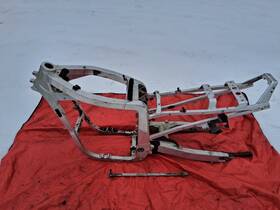
( Manufacturer Part Number: JS16V73A3M2102247 ), ( Frame Type: Sport Bike ), ( Type: Frame ), ( Machine Type: Street Motorcycle ), ( Color: Silver ), ( Material: Aluminum ), ( Finish: Polished ), ( Placement On Vehicle: Front, Left, Rear, Lower, Right, Upper )
Review SUZUKI Complete Frame fits 1100 GSXR 1990–1992
The **Suzuki GSX-R 1100 (JS16V73A3M2102247) frame from the 1990 1992 model years** represents a legendary cornerstone in the evolution of modern sportbikes, embodying a perfect blend of cutting-edge engineering, aggressive styling, and track-proven performance that defined an era. This frame, forged from high-strength chromium-molybdenum steel, showcases Suzuki s precision manufacturing, featuring a double-cradle design with a central backbone that houses the engine and transmission, while the upper and lower triple-clamp forks integrate seamlessly into the frame s geometry. The 1990 1992 GSX-R 1100 frames are particularly sought after by enthusiasts for their refined chassis dynamics, which were the result of Suzuki s collaboration with factory racing teams, including those competing in the All-Japan Road Race Championship. The frame s compact, aggressive stance culminating in a 13.8-inch wheelbase and a 25-degree rake angle was engineered to maximize cornering stability and responsiveness, making it a favorite among racers and street riders alike. The front suspension is anchored by a pair of 41mm inverted Showa SFF-BP (Single Front Fork-Back Push) forks, which, while not as advanced as later models, still deliver a firm yet compliant ride, while the rear features a progressive-link suspension system with a single shock absorber, ensuring predictable handling under both high-speed cruising and aggressive cornering. The frame s design also incorporates a fully adjustable seat height (ranging from 30.7 inches to 32.3 inches) and a low center of gravity, attributes that contributed to its dominance on the track and its appeal as a daily rider. Whether restored to pristine condition or preserved in its original patina, this frame is a tangible piece of motorcycle history, embodying the spirit of the late '80s and early '90s when the GSX-R 1100 redefined what a sportbike could achieve. Its legacy endures not only in the hearts of collectors but also in the countless riders who experienced its raw, unfiltered power and razor-sharp handling, making it a coveted component for both restoration projects and modern builds.
Buying a **Suzuki GSX-R 1100 (JS16V73A3M2102247, 1990 1992 model)** as a frame or a complete bike has distinct advantages and drawbacks, depending on your goals, budget, and experience level. Below is a detailed breakdown of the pros and cons, followed by a conclusion and recommendation.
---
### **Pros of the Suzuki GSX-R 1100 (1990 1992) Frame/Complete Bike**
1. **Iconic Racing Heritage**
The GSX-R 1100 was Suzuki s first true sports bike, designed to compete in racing and street use. Its reputation as a high-performance, track-capable machine remains strong, making it a desirable platform for enthusiasts who appreciate its legacy.
2. **Strong Engine and Performance**
The **1,084cc liquid-cooled inline-four** (with a 10:1 compression ratio in early models) produces around **130 140 hp** and **85 90 lb-ft of torque**, which was impressive for its time. The engine is known for its smooth power delivery, high RPM range, and durability if maintained properly. Later models (1992) received a revised camshaft and exhaust for better mid-range power.
3. **Lightweight and Agile**
The GSX-R 1100 was one of the lightest production bikes of its class in the early '90s, weighing around **450 470 lbs (wet)**. Its **aluminum frame** and **steel subframe** provide a good balance of stiffness and weight savings, contributing to sharp handling.
4. **Reliability and Durability**
Suzuki s inline-four engines are historically robust, especially when compared to some of its competitors V-twins or early four-cylinder designs. With proper maintenance, the engine and transmission can last well over **100,000 miles**. The **5-speed transmission** is simple and durable, though clutch wear can be an issue over time.
5. **Aftermarket Support**
The GSX-R 1100 has a **thriving aftermarket**, with parts available for upgrades such as:- **Engine**: Camshafts, pistons, crankshafts, and cylinder heads for increased power.
- **Exhaust**: High-flow headers and mufflers for better flow.
- **Suspension**: hlins or Marzocchi forks, rear shock upgrades.
- **Brakes**: Brembo or EBC rotors and calipers for improved stopping power.
- **Aesthetics**: Custom paint, fairings, and bodywork.
This makes it easier to customize or restore the bike to your preferences.
6. **Classic Racing Potential**
The GSX-R 1100 was a **factory-backed race bike** in the early '90s, competing in events like the **AMA Superbike Championship**. Its chassis and engine are well-suited for track use, making it a great choice for those interested in **street-legal racing** or **homologation specials**.
7. **Nostalgia and Collectibility**
For enthusiasts who appreciate **classic motorcycle design**, the GSX-R 1100 is a standout. Its **aerodynamic fairings, aggressive styling, and racing pedigree** make it a sought-after bike for collectors and riders who value history.
8. **Fuel Injection (Later Models)**
The **1992 model** introduced **electronic fuel injection (EFI)**, which improved throttle response and reliability compared to the **carbureted 1990 1991 models**. This makes the later version more modern and easier to maintain.
9. **Resale Value for Restored Examples**
A well-maintained or restored GSX-R 1100 can hold its value, especially if it s kept in original condition or upgraded with period-correct parts. The bike s rarity (compared to later models) also contributes to its appeal.
10. **Great for Learning Racing Fundamentals**
The bike s **light weight, aggressive handling, and high power-to-weight ratio** make it an excellent choice for riders looking to **develop track skills**. Its **narrow tire footprint** and **quick steering** require precise input, which is ideal for learning cornering techniques.
---
### **Cons of the Suzuki GSX-R 1100 (1990 1992) Frame/Complete Bike**
1. **Age and Wear**
Bikes from this era (especially the **1990 1991 carbureted models**) can suffer from **aging components**, including:- **Carburetors** (in early models) that may require frequent cleaning or replacement.
- **Timing chain and belt** (depending on the model) that may stretch or wear out over time.
- **Suspension** (original Showa units) that can become stiff or leaky.
- **Brakes** (original discs and pads) that may need resurfacing or replacement.
2. **Maintenance Intensity**
Unlike modern bikes with **self-diagnostic systems**, the GSX-R 1100 requires **regular tuning and adjustments**, such as:- **Carburetor maintenance** (if not converted to EFI).
- **Valve adjustments** (every 5,000 10,000 miles).
- **Chain or belt maintenance** (timing issues can be catastrophic).
- **Spark plug and ignition system checks**.
This makes it less ideal for **casual riders** who prefer low-maintenance machines.
3. **Rust and Corrosion**
Many early '90s bikes suffer from **rust in the frame, swingarm, or subframe**, especially if they were stored in wet conditions. A **frame inspection** is crucial before purchase, as rust can compromise structural integrity.
4. **Limited Modern Comfort**
The GSX-R 1100 was designed for **racing and track use**, not long-distance touring. Key drawbacks include:- **Narrow, hard seat** (not ergonomic for relaxed riding).
- **Poor wind protection** (minimal fairings compared to modern bikes).
- **Basic instrumentation** (no digital dash in early models).
- **Rigid exhaust headers** (can be loud and uncomfortable for some riders).
5. **Parts Availability and Cost**
While parts are available, some **specialty items** (e.g., OEM fairings, specific carburetors, or rare electronics) can be **expensive or hard to find**. Buying a **frame-only** may require sourcing **used or aftermarket parts** to complete the bike.
6. **Fuel Injection Issues (Early Models)**
The **1990 1991 carbureted models** can be **fussy to tune**, especially in varying conditions. The **1992 EFI model** is more reliable but still requires **regular tuning** to maintain performance.
7. **Handling Challenges for Beginners**
The bike s **light weight and aggressive nature** make it **difficult for inexperienced riders**. Its **quick steering and high power** can lead to **loss of control** if the rider isn t skilled. It s best suited for **confident riders** who understand its capabilities.
8. **Weight Distribution and Stability**
The **narrow tire footprint** and **high power output** can make the GSX-R 1100 **less stable at low speeds** compared to modern bikes. It s not ideal for **city riding** or **traffic maneuvering**.
9. **Cost of Restoration**
If buying a **frame-only or a project bike**, the **cost of restoration** (engine rebuild, suspension refresh, brakes, etc.) can add up quickly. A **complete, restored GSX-R 1100** may still be **more expensive** than a modern sportbike with similar power.
10. **Legal and Insurance Considerations**
- **Modifications** (e.g., exhaust, suspension, or engine tweaks) may require **homologation** for racing or street-legal use.
- **Insurance costs** can be higher due to the bike s **high value and performance characteristics**.
- Some **modern regulations** (e.g., emissions, lighting) may require updates if the bike is to be ridden legally in certain areas.
---
### **Conclusion**
The **Suzuki GSX-R 1100 (1990 1992)** is a **fantastic choice** for riders who:- **Appreciate classic racing heritage** and want a bike with a **strong performance legacy**.
- Are **skilled or willing to learn** due to its **aggressive handling and high power**.
- Enjoy **customization and maintenance** as part of the ownership experience.
- Seek a **lightweight, track-capable machine** for **racing or track days**.
- Value **nostalgia and collectibility** over modern convenience.
However, it is **not ideal** for:- **Beginners or casual riders** who prefer a more forgiving machine.
- Those who want a **low-maintenance, comfortable, or touring-oriented bike**.
- Buyers who prioritize **modern technology** (e.g., traction control, ABS, digital dash).
- Those on a **tight budget**, as restoration costs can be significant.
---
### **Recommendation**
Details:
Frame is originally 1991 Suzuki Gsxr 1100. In Great Condition.
part #: js16v73a3m2102247 prices
- $324.99-$1299.99
specifications mocycfra:
- for models: 1100, Gsxr
- for makes: Suzuki
- for years: 1990-1992
- mpn: Js16v73a3m2102247
- frame type: Sport Bike
- type: Frame
- machine type: Street Motorcycle
- color: Silver
- material: Aluminum
- finish: Polished
- placement on vehicle: Front, Left, Rear, Lower, Right, Upper
offer mocycfra:
- sold: 0
- availability: In Stock
- started: February 9, 2026
- options: Seller-arranged-local-pickup
- quantity: 1
shipping mocycfra:
returns mocycfra:
- policy: No Returns
seller mocycfra:
- rating: 100.0%
- # reviews: 157
- city: Rustburg, Virginia
payments mocycfra:
- other
- wallet: Paypal
- credit card: Diners-club
general mocycfra:
- condition: Used
- Motorcycle Scooter Parts Accessories > Body Frame > Frames Parts
Suzuki JS16V73A3M2102247 Is Similar To:
- 41200-37f00 Suzuki To Sub Frame Model (28.9% similar) Perfectly straight threads are in good condition...(March 7th, 2018)
- 01drz400subrame Suzuki Subframe Sub Frame Fits (30.5% similar) ...(February 16th, 2017)
- 033-00370 Lightspeed Carbon Frame Guard Set Fiber For Suzuki (21.8% similar) ...(September 24th, 2018)
- 040ha110400 Yoshimura Works Edition Frame Sliders Suzuki (29.6% similar) The plastic construction is soft enough to slow slides and wear down slowly, yet tough keep roads surface away from your bike in most cases. Help minimize damage from sliding type FALLS6061-T6 aluminum mounts are CBC machined and hard-anodize dinner sleeve with laser-etched Chimera logo includes all...(July 6th, 2018)
- 10000-00s00 Unbranded Suzuki Gsxr Srad Antler Fairing Stay (25.6% similar) Used fairing stay for a suzuki gsxr 600 or 750. Has normal wear but no damage...(April 29th, 2018)
- 1010175 Krator No Cut Black Frame Sliders For Suzuki Gsxr (19% similar) Part: 2001 -2002 prices...(May 14th, 2018)
- 1060196 Suzuki Rear Subframe Back Sub Frame Basket (33% similar) Please see pictures for best details as scratches dents holes are usually pointed out with a bright colored tool...(July 5th, 2018)
- 1064050 Suzuki Rear Subframe Back Sub Frame (35.3% similar) Each part is systematically placed to be easily located once purchased. If the item does not fit motorcycle model's specified in listing. More options available upon request...(April 10th, 2018)
- 1064923 Suzuki Frame Chassis Slvg Exempt Miles (22.9% similar) If the item does not fit motorcycle model's specified in listing. Many countries only allow 79 max package length and girth combined. More options available upon request. Each part is systematically placed to be easily located once purchased...(May 23rd, 2018)
- 1065116 Suzuki Rear Subframe Back Sub Frame (35.3% similar) More options available upon request. If the item does not fit motorcycle model's specified in listing. Many countries only allow 79 max package length and girth combined...(May 5th, 2018)
- 1065943 Suzuki Rear Back Tail Subframe Sub Frame (35.5% similar) More options available upon request. If the item does not fit motorcycle model's specified in listing. Many countries only allow 79 max package length and girth combined...(June 5th, 2018)