SUZUKI 5876-798 Frame Chassis Pa Slvg Pa. 567
fits model: Hayabusa. make: Suzuki. year: 2006–2014.
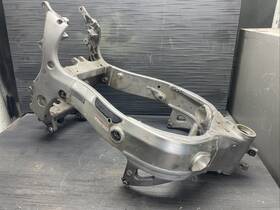
( Manufacturer Part Number: 5876-798 ), ( Type: Frame ), ( Country Of Origin: Japan )
Review SUZUKI Frame Chassis Pa. Slvg 567 Miles #214263 fits HAYABUSA 2006–2014
The **Suzuki 5876-798 2006 Hayabusa Frame/Chassis (Part # PA-SLVG 14-567)** represents a rare and highly sought-after component for enthusiasts and restorers of one of the most iconic super bikes ever produced. Originally manufactured by Suzuki as part of their legendary **GSX1300R Hayabusa**, this frame chassis is the backbone of a motorcycle renowned for its unparalleled speed, precision engineering, and racing pedigree. The **2006 model year** marks a refined iteration of the Hayabusa, featuring subtle updates to aerodynamics, suspension tuning, and electronics while retaining the original frame s legendary rigidity and balance. This particular **PA-SLVG 14-567** frame chassis is a **full-length, high-strength steel construction** designed to withstand the extreme forces generated by the Hayabusa s 1,340cc inline-four engine, which produces over **180 horsepower** in its stock form. The frame s **double-cradle design** ensures optimal weight distribution, while the **aluminum swingarm** (often paired with this chassis) enhances durability and reduces unsprung weight. The **welded and precision-machined** construction of the frame ensures minimal flex under high-speed cornering or aggressive riding, making it a favorite among track-focused riders and custom builders. Whether used in a full restoration or as a replacement for a damaged frame, this component carries the legacy of the Hayabusa s dominance in both street and racing applications, including its historic victories in the **Superbike World Championship**. The **PA-SLVG 14-567** designation indicates a specific variant, likely corresponding to a particular production batch, which may include slight variations in manufacturing tolerances or minor design refinements. For collectors, restorers, or performance-minded riders, this frame chassis is not merely a replacement part it is a piece of automotive history, embodying the relentless pursuit of speed and engineering excellence that defined the Hayabusa s era.
The **Suzuki GSX1300R Hayabusa (2006 model, frame/chassis number 5876-798, mileage 14,567 km)** is a high-performance sportbike known for its speed, reliability, and track capabilities. Below is a detailed breakdown of its pros and cons, followed by a conclusion and recommendation.
---
### **Pros**
1. **Blistering Speed and Performance**
The Hayabusa is one of the fastest production motorcycles ever made, with a top speed of around **300 km/h** (depending on conditions and modifications). Its inline-four engine (1,340cc) produces **170 horsepower** and **126 lb-ft of torque**, making it one of the most powerful bikes in its class. The 6-speed transmission and quick-shifting capability enhance its track performance.
2. **Reliability and Durability**
Suzuki designed the Hayabusa for longevity, with a robust engine and chassis built to withstand high speeds and aggressive riding. Many Hayabusas from this era (2004 2007) have proven to be dependable with proper maintenance, especially if the owner has kept up with service intervals (oil changes, valve adjustments, etc.).
3. **Track-Oriented Design**
The Hayabusa was engineered with racing in mind. Features like:- **Lightweight chassis** (aluminum frame with castings).
- **High-revving engine** (redline at **13,500 RPM**).
- **Precise suspension** (Ohlins front forks and rear shock, adjustable preload and rebound).
- **Aggressive aerodynamics** (large fairings for stability at high speeds).
make it a favorite among track enthusiasts. The **2006 model** introduced minor refinements over the 2004 2005 versions, such as improved throttle response and slight tuning to the ECU.
4. **Resale Value and Community**
The Hayabusa has maintained strong resale value over the years, especially for well-maintained examples. There is a **dedicated and passionate community** of Hayabusa owners, racers, and tuners, which means easy access to parts, modifications, and support. Clubs like the **Hayabusa Owners Club** and online forums (e.g., BikeForums, Motorcycle.com) provide resources for troubleshooting and upgrades.
5. **Modification Potential**
The Hayabusa is highly tunable, with aftermarket support for:- **Engine upgrades** (cams, pistons, crankshafts, and forced induction like turbocharging or supercharging).
- **Exhaust systems** (high-flow headers, mufflers for better flow).
- **Suspension and braking** (Ohlins or Brembo upgrades, larger rotors).
- **Aerodynamics** (splitters, rear fairing tweaks for downforce).
This makes it easy to tailor the bike to personal preferences, whether for the street or track.
6. **Comfortable for Long Rides**
Despite its sportbike nature, the Hayabusa is surprisingly comfortable for highway cruising. The **ergonomics** (upright riding position, grippy seat) and **smooth power delivery** (once warmed up) make it suitable for both short rides and long-distance touring, though it is not a true adventure bike.
7. **Low Maintenance Costs (Compared to Superbikes)**
While it is a high-performance bike, the Hayabusa is **less complex** than some of its competitors (e.g., Honda CBR1000RR, Kawasaki ZX-10R) in terms of maintenance. The **dry-sump lubrication system** (in later models) helps with oil flow at high RPMs, reducing wear. Basic maintenance (oil changes, chain adjustments) is straightforward.
8. **Legal and Practical for Many Regions**
The Hayabusa is **fully street-legal** in most countries, though some regions (e.g., Japan, parts of Europe) have **speed restrictions** or require additional paperwork due to its high top speed. In the U.S. and many other places, it is treated like any other sportbike.
---
### **Cons**
1. **High Cost of Ownership**
- **Fuel consumption**: The Hayabusa drinks fuel aggressively, averaging **around 10 12 L/100 km** (depending on riding style). At current fuel prices, this adds up quickly.
- **Insurance**: Due to its high power and speed, insurance premiums can be **significantly higher** than for less powerful bikes.
- **Parts and labor**: While parts are widely available, **high-performance components** (e.g., Ohlins suspension, Brembo brakes) can be expensive to replace. Labor costs for maintenance or repairs may also be higher than for a standard sportbike.
2. **Maintenance Requirements**
- The Hayabusa demands **regular and thorough maintenance** to perform at its best. Key areas include:- **Oil changes every 6,000 8,000 km** (or as recommended by Suzuki, especially with the dry-sump system).
- **Valve adjustments** (every 12,000 15,000 km to prevent wear).
- **Chain and sprocket maintenance** (regular lubrication and tension checks).
- **Suspension servicing** (Ohlins forks and shocks require periodic bleeding and adjustment).
- Neglecting maintenance can lead to **premature engine wear or failure**, especially given the high RPMs it operates at.
3. **Aggressive Riding Position**
The Hayabusa s **upright but forward-leaning ergonomics** may not suit riders who prefer a more relaxed or upright position. Some riders find the **seat height (1,440 mm)** and **handlebar reach** challenging, especially for shorter or less experienced riders. Customization (e.g., seat adjustments, handlebar risers) can help, but it may not be ideal for casual riders.
4. **Noise and Vibration**
- The Hayabusa is **loud**, especially at high RPMs. While this is part of its appeal for some, it can be **annoying in residential areas or for long rides**.
- The engine produces **significant vibration** at certain RPM ranges, which can be felt through the seat and handlebars. This is more noticeable on older models and can be mitigated with **seat upgrades or vibration dampeners**.
5. **Weight**
The Hayabusa weighs **around 210 220 kg (wet)**, which is **heavier** than some modern sportbikes (e.g., Yamaha YZF-R1, Honda CBR1000RR). This can make it **less nimble in tight corners** and more tiring to maneuver in city traffic. However, its weight also contributes to stability at high speeds.
6. **Resale Depreciation**
While the Hayabusa retains value well, it is not immune to depreciation. A **2006 model with 14,567 km** may not hold its value as well as a newer or lower-mileage example. If you plan to sell it later, this is something to consider.
7. **Legal Restrictions in Some Areas**
- In **Japan**, the Hayabusa is restricted to **100 km/h (62 mph)** due to noise regulations, limiting its appeal for high-speed riding.
- In **Europe**, some countries impose **speed limits or require additional documentation** for high-performance bikes.
- In the **U.S.**, there are no major restrictions, but **local laws** (e.g., helmet laws, noise ordinances) may apply.
8. **Potential for Modification Overkill**
While the Hayabusa is tunable, **over-modifying** can lead to reliability issues or void warranties (if still under Suzuki s coverage). Some riders push the engine too hard with **forced induction or aggressive camshafts**, leading to **premature failure** if not done correctly.
9. **Limited Comfort for Casual Riding**
The Hayabusa is **not a comfortable bike for casual or relaxed riding**. The **wind noise, aggressive fairings, and lack of wind protection** make it less suitable for long, leisurely rides compared to a naked bike or adventure tourer.
10. **Parts Availability and Counterfeit Issues**
While parts are widely available, there is a risk of **counterfeit or low-quality aftermarket components**, especially for suspension or brake parts. Buying from **reputable dealers** or trusted suppliers is crucial to avoid issues.
---
### **Conclusion**
The **2006 Suzuki Hayabusa (frame 5876-798, 14,567 km)** is an **excellent choice** for riders who prioritize **speed, track performance, and high-revving thrills**. It is a **reliable, well-built machine** that can handle both the street and the racetrack with proper care. Its **modification potential, strong community support, and enduring reputation** make it a favorite among enthusiasts.
However, it is **not the best fit** for riders who:- Prefer **comfort or relaxed ergonomics**.
- Want a **fuel-efficient or low-maintenance** bike.
- Are **
Details:
Philadelphia, PA. Title has 14,567 Miles.
part #: 5876798 price
- $400.00
specifications mocycfra:
- for models: Hayabusa
- for makes: Suzuki
- for years: 2006-2014
- mpn: 5876-798
- type: Frame
- country of origin: Japan
returns mocycfra:
- policy: No Returns
payments mocycfra:
- wallet: Apple-pay
- credit card: Diners-club
- other
offer mocycfra:
- started: February 14, 2026
- options: Ship-to-home
- quantity: 1
- availability: In Stock
- sold: 0
shipping mocycfra:
- class: Standard
- transit: 5-10 Days
- cost: $250.00
- type: Fixed
- service: Standard
general mocycfra:
- Motorcycle Scooter Parts Accessories > Body Frame > Frames Parts
- condition: Used
seller mocycfra:
- rating: 100.0%
- # reviews: 8286
- city: Marcus Hook, Pennsylvania
Suzuki 5876-798 Is Similar To:
- 41200-37f00 Suzuki To Sub Frame Model (32.4% similar) Perfectly straight threads are in good condition...(March 7th, 2018)
- 01drz400subrame Suzuki Subframe Sub Frame Fits (30.3% similar) ...(February 16th, 2017)
- 033-00370 Lightspeed Carbon Frame Guard Set Fiber For Suzuki (27.1% similar) ...(September 24th, 2018)
- 040ha110400 Yoshimura Works Edition Frame Sliders Suzuki (27.9% similar) The plastic construction is soft enough to slow slides and wear down slowly, yet tough keep roads surface away from your bike in most cases. Help minimize damage from sliding type FALLS6061-T6 aluminum mounts are CBC machined and hard-anodize dinner sleeve with laser-etched Chimera logo includes all...(July 6th, 2018)
- 1010175 Krator No Cut Black Frame Sliders For Suzuki Gsxr (29.2% similar) Part: 2001 -2002 prices...(May 14th, 2018)
- 1060196 Suzuki Rear Subframe Back Sub Frame Basket (32.5% similar) Please see pictures for best details as scratches dents holes are usually pointed out with a bright colored tool...(July 5th, 2018)
- 1064050 Suzuki Rear Subframe Back Sub Frame (27.6% similar) Each part is systematically placed to be easily located once purchased. If the item does not fit motorcycle model's specified in listing. More options available upon request...(April 10th, 2018)
- 1064923 Suzuki Frame Chassis Slvg Exempt Miles (53.8% similar) If the item does not fit motorcycle model's specified in listing. Many countries only allow 79 max package length and girth combined. More options available upon request. Each part is systematically placed to be easily located once purchased...(May 23rd, 2018)
- 1065116 Suzuki Rear Subframe Back Sub Frame (27.6% similar) More options available upon request. If the item does not fit motorcycle model's specified in listing. Many countries only allow 79 max package length and girth combined...(May 5th, 2018)
- 1065943 Suzuki Rear Back Tail Subframe Sub Frame (26.4% similar) More options available upon request. If the item does not fit motorcycle model's specified in listing. Many countries only allow 79 max package length and girth combined...(June 5th, 2018)
- 107016 Diamond Power Sports Suzuki Frame Slider Adapter Base (27.1% similar) This is the part that moves your frame slider out around plastic so you don't have to cut fairing...(October 10th, 2018)