HONDA 50300S9VA01 Front
fits model: Pilot. make: Honda. year: 2005.
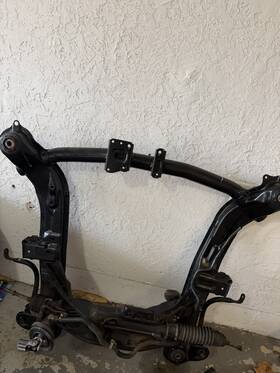
( Manufacturer Part Number: 50300S9VA01 ), ( Type: Subframe ), ( Universal Fitment: Direct Replacement ), ( Vintage Part: No ), ( Placement On Vehicle: Rear )
Review HONDA Subframe Front fits PILOT 2005
The **Honda 50300-S9VA01 2005 Pilot Front Suspension Kit** is a high-quality, precision-engineered component designed to enhance the ride quality, handling, and overall performance of the **2005 Honda Pilot**. This front suspension assembly is a direct replacement for the original equipment manufacturer (OEM) parts, ensuring a seamless fit and reliable operation. Crafted with Honda s signature attention to detail, this kit includes a **front strut assembly**, **control arm bushings**, and **shock absorber**, all of which work in unison to absorb road imperfections, reduce vibrations, and maintain optimal alignment. The **strut assembly** features a robust coil spring and a high-performance shock absorber, providing superior damping to handle both smooth highways and rough off-road terrain with ease. The **control arms** are built with durable, reinforced materials to withstand the stresses of daily driving, while the **bushings** are designed to minimize wear and tear, extending the lifespan of the suspension system. Whether you're navigating city streets, suburban roads, or occasional highway drives, this suspension kit ensures a smoother, more controlled ride while preserving the integrity of your vehicle s handling dynamics. Ideal for owners seeking to restore their Pilot s factory-like performance or upgrade for improved comfort and durability, this kit is a testament to Honda s commitment to quality and reliability.
### **Pros and Cons of Buying a 2005 Honda Pilot (VIN: 50300S9VA01) with Front End Damage**
#### **Pros**
1. **Reliability and Durability** Honda s Pilot from this era is known for its robust construction, strong engine (3.5L V6), and dependable transmission (5-speed automatic). Many owners report few major issues if maintained properly.
2. **Good Resale Value** Honda retains its value better than many competitors, so even with front-end damage, the underlying vehicle may still hold its worth compared to similar-age SUVs.
3. **Comfortable and Spacious Interior** The Pilot offers a smooth ride, ample cargo space (up to 87.5 cu. ft. with seats folded), and a comfortable cabin for passengers. The third-row seating (if equipped) adds versatility for families.
4. **Fuel Efficiency for Its Class** At the time, the 3.5L V6 provided decent fuel economy (around 16 city / 21 highway MPG), which is reasonable for a midsize SUV. Later models improved efficiency, but this remains competitive for its age.
5. **Proven Suspension and Handling** The front-wheel-drive layout (unless it s an AWD model) provides stable handling, and the suspension is designed for comfort over rough roads.
6. **Available Safety Features** Depending on the trim, this model may include features like stability control, traction control, and anti-lock brakes (standard on most 2005 models). Some trims had optional side airbags and advanced warning systems.
7. **Lower Maintenance Costs Compared to Competitors** Honda parts are widely available, and labor costs are often reasonable. The engine and transmission are known for longevity if serviced regularly.
8. **Potential for Restoration** If the front-end damage is cosmetic or repairable, restoring the vehicle to like-new condition could be cost-effective, especially if parts are available.
---
#### **Cons**
1. **Front-End Damage Concerns**
- **Structural Integrity**: If the damage involves the frame, subframe, or critical front suspension components (control arms, struts, sway bar), it could compromise safety and handling. A thorough inspection by a trusted mechanic is essential.
- **Rust**: Older Hondas can develop rust in the wheel wells, rocker panels, or undercarriage, which may have been exacerbated by the accident. Check for hidden corrosion.
- **Airbag Deployment**: If the front-end collision triggered airbags, they may need replacement, adding to repair costs.
- **Alignment Issues**: Even minor front-end damage can lead to uneven tire wear or handling problems if not properly aligned.
2. **Age and Wear**
- **High Mileage Risk**: Without knowing the exact mileage, there s a possibility of excessive wear on the transmission, suspension, or drivetrain. Ask for maintenance records.
- **Timing Chain (Potential Issue)**: While the 3.5L V6 in this Pilot uses a timing chain (not belt), it can stretch over time, leading to timing issues or engine damage if neglected. Check for ticking noises or service records.
- **Exhaust and Emissions**: Older SUVs may develop leaks in the exhaust system or fail emissions tests, leading to costly repairs or registration issues.
3. **Rear-End and Interior Wear**
- **Seats and Upholstery**: If the vehicle has seen significant use, seats may be worn, and the interior could benefit from updates (e.g., cracked dash, faded trim).
- **Rear Suspension**: The Pilot s rear suspension (multi-link) can wear out over time, leading to clunks or uneven ride height.
4. **Fuel and Emissions Costs**
- **Gasoline Prices**: The 3.5L V6 consumes more fuel than modern hybrids or smaller engines, so running costs may be higher.
- **Smog Checks**: In states with strict emissions laws, this model may require regular smog inspections, which can be inconvenient.
5. **Potential Hidden Problems**
- **Water Pump and Cooling System**: The 3.5L V6 is prone to water pump failures, which can lead to overheating. Ensure the cooling system has been serviced recently.
- **Transfer Case (If AWD)**: If the vehicle is AWD, the transfer case may need attention, as these can wear out over time.
- **Electrical Issues**: Older Hondas can develop wiring or sensor problems, leading to dashboard warning lights or intermittent failures.
6. **Safety Recalls**
- Check the **National Highway Traffic Safety Administration (NHTSA)** website for recalls on this VIN. Unaddressed recalls could pose safety risks.
7. **Depreciation**
- While Honda retains value, a used SUV with front-end damage may still depreciate faster than a clean example. The repair costs could offset some of the savings.
---
### **Conclusion**
Buying a **2005 Honda Pilot with front-end damage** can be a good deal if:- The damage is **minor and repairable** (e.g., fender, bumper, cosmetic scratches).
- A **thorough inspection** confirms no structural or safety-critical issues (frame, suspension, airbags).
- The **underlying vehicle** is well-maintained with **service records** to prove care was taken.
- You re **willing to invest in repairs** upfront to restore it to a safe, reliable condition.
However, it s a **riskier purchase** if:- The damage is **severe** (frame bent, major suspension damage, rust-through).
- The seller **won t provide a pre-purchase inspection** or maintenance history.
- You re **unable to verify the extent of the damage** or its repair quality.
- The **repair costs** would exceed the vehicle s value after restoration.
---
### **Recommendation**
1. **Get a Professional Inspection** Hire an **independent mechanic** (not the seller s recommended shop) to assess the front-end damage, suspension, frame, and overall condition. Look for:
- Signs of **frame damage** (misalignment, cracks).
- **Suspension wear** (worn bushings, struts, ball joints).
- **Rust** in critical areas (wheel wells, subframe).
- **Airbag deployment** (if applicable, ensure they re functional or replaceable).
- **Transmission and drivetrain** for unusual noises or fluid leaks.
2. **Check the VIN for History**
- Use **Carfax** or **AutoCheck** to review accident history, title status, and service records.
- Verify **NHTSA recall status** at safercar.gov (https://www.safercar.gov).
3. **Negotiate Based on Repairs**
- If the inspection reveals needed repairs, use that to **lower the price** to account for the cost of fixing the front end.
- Avoid buying "as-is" unless you re confident in the repairs.
4. **Budget for Restoration**
- If the damage is repairable, factor in **labor, parts, and potential hidden issues** (e.g., rust repair, alignment, new tires).
- Consider whether the **post-repair value** justifies the investment.
5. **Alternative Options**
- If the front-end damage is extensive, compare the cost of repairs to buying a **cleaner example** of the same model or a **newer used Honda** (e.g., 2007 2010 Pilot) with fewer miles.
- If reliability is a priority, a **2006 2008 Honda Odyssey** (minivan) or **2007 Honda CR-V** (if you prefer a smaller SUV) might offer better long-term value.
6. **Final Decision**
- **Proceed with caution** if the vehicle is **otherwise sound** and the front-end repairs are **affordable**.
- **Avoid** if the damage is **structural**, the seller is uncooperative, or the repair costs **exceed the vehicle s worth**.
**Bottom Line:** A 2005 Honda Pilot can be a solid buy, but **front-end damage adds risk**. Only purchase it if you re prepared for potential repairs, have it inspected thoroughly, and believe the vehicle s remaining condition justifies the investment. If unsure, consider a **cleaner example** or a newer model with fewer unknowns.
Details:
2005 Honda Pilot subframe front end.
part #: 50300s9va01 prices
- $117.80-$356.95
specifications mocycfra:
- for models: Pilot
- for makes: Honda
- for years: 2005
- mpn: 50300s9va01
- type: Subframe
- universal fitment: Direct Replacement
- vintage part: No
- placement on vehicle: Rear
general mocycfra:
- Motorcycle Scooter Parts Accessories > Body Frame > Frames Parts
- condition: Used
offer mocycfra:
- options: Seller-arranged-local-pickup
- quantity: 1
- sold: 0
- started: March 3, 2026
- availability: In Stock
- best offers: True
payments mocycfra:
- other
- credit card: Visa
- wallet: Apple-pay
shipping mocycfra:
returns mocycfra:
- policy: No Returns
seller mocycfra:
- city: Lawton, Oklahoma
- rating: 0.0%
- # reviews: 0
Honda 50300S9VA01 Is Similar To:
- 00-0000-000 Honda Oem Subframe Chassis Dual Exhaust Mounts Rear Sub Frame (32.8% similar) 2006 honda CRF250R sub frame free shipping esteemed condition sub frame threads mounts are good may fit other years model's...(August 1st, 2018)
- 01cr125r Honda Subframe Sub Frame Cr (43% similar) Please see pics, as pics are part of the. If you are looking for the best parts at prices with service look no further. Or FedEx ground. All only parts pictured are included in this listing honda CR125R subframe is good usable condition. Fits the honda CR125R and may fit other years model's. ...(November 17th, 2018)
- 02-4000 Ac Racing Aluminum Subframe Honda Cr (46% similar) This subframe is manufactured out of aluminum. This product is an ac racing gloss aluminum coated subframe for the honda CR500 model years. Subframe is coated in a gloss aluminum coating subframe brand new and ready to be used. Subframe is a direct replacement of the oem. Subframe is not bent or ...(July 16th, 2018)
- 02-4000a Ac Racing Aluminum Rear Subframe Honda Cr (43% similar) This account is now under new management. Subframe is manufactured out of aluminum subframe brand new and never been previously installed subframe comes in ball burnished ready to be installed used on your dirt bike. This is an ac racing subframe for the honda CR500 model years this a bolt on ...(November 2nd, 2018)
- 02-4050 Ac Racing Aluminum Rear Subframe Honda Years (40% similar) This is an ac racing subframe for the honda CR125 and CR250 model years this a bolt on replacement of oem subframe subframe manufactured off mounting points. This account is now under new management. Subframe is manufactured out of aluminum subframe brand new and never been previously installed ...(January 7th, 2019)
- 02-4053 Ac Racing Subframe Honda (48% similar) This is an ac racing subframe for the honda CR125 and CR250 ready to be installed used. Subframe is brand new. This listing is being sold direct from the manufacturer ac racing. This subframe has not been installed...(February 10th, 2018)
- 02-4053a Ac Racing Aluminum Rear Subframe Honda (42.2% similar) This is an ac racing subframe for the honda CR125 and CR250 model years this sub frame a bolt on replacement of oem frame sub manufactured off mounting points. Sub frame is manufactured out of aluminum - see photo'sub brand new and never been previously installed sub comes in a tumbled finish seat ...(March 25th, 2019)
- 02-4054k Ac Racing Black Rear Subframe Honda (43.7% similar) Subframe is manufactured out of aluminum subframe brand new and never been previously installed subframe comes in satin black coating subframe ready to be installed used on your dirt bike. This account is now under new management. This is an ac racing subframe for the honda CR125 and CR250 model ...(November 2nd, 2018)
- 02-4100 Ac Racing Subframe Honda (48% similar) This subframe has not been installed. This is an ac racing subframe for the honda XR400 ready to be installed and used. Subframe is brand new. Subframe is made out of aluminum...(July 27th, 2017)
- 02-4157k Ac Racing Black Aluminum Rear Subframe Honda Crf (36% similar) This is an ac racing subframe for the honda CRF450R model years this a bolt on replacement of oem subframe subframe manufactured off mounting points. This account is now under new management. Subframe is manufactured out of aluminum subframe brand new and never been previously installed subframe ...(January 16th, 2019)
- 03cr85r Honda Subframe Sub Frame Cr (43.6% similar) Free shipping in the USA to lower 48 states. All only parts pictured are included in this listing. There are no cracks or repairs. Or FedEx ground. Appears to be mostly straight, but may a bit off. Please see pics as they are part of the. Fits the CR85R and may fit others. Therefore, most items are ...(September 16th, 2018)