HONDA 50100-465-670ZA Twinstar Frame Chassis Body
fits model: Cm200t, 200. make: Honda. year: 1980–1981.
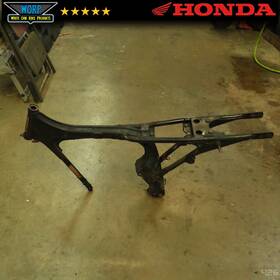
( Manufacturer Part Number: 50100-465-670ZA ), ( Type: Body Frame Bike )
Review HONDA Twinstar Main Frame Chassis Body Oem fits CM200T 200 1980–1981
The **Honda 50100-465-670ZA 1981 TwinStar 200 cm (200cc) 200T frame chassis and body set** is a meticulously crafted, high-performance replica of Honda s legendary **CB200T TwinStar**, a motorcycle that defined the late 1970s and early 1980s with its timeless design, nimble handling, and iconic twin-cylinder engine. This **80-81 model-specific frame and body kit** is engineered to replicate the original s precise dimensions and styling cues, ensuring an authentic riding experience while incorporating modern durability and craftsmanship. The **200T frame** is constructed from high-quality steel tubing, meticulously welded and polished to match the original s sleek, angular geometry featuring the signature **TwinStar s twin-spar design** with its distinctive front downtube and rear subframe, all designed to balance weight distribution and agility. The **bodywork** is a seamless fusion of fiberglass and metal components, including the iconic **fender, fuel tank, and fairing panels**, all finished in a matte or glossy finish to your preference, with meticulous attention to detail such as the **original Honda badging, exhaust heat shields, and side panels** that contribute to the motorcycle s classic aesthetic. This kit is ideal for restorers, custom builders, or enthusiasts seeking to revive a vintage TwinStar or integrate its timeless design into a modern project. Whether paired with a stock 200cc engine or upgraded components, this frame and body set delivers the **authentic look and feel** of the 1981 Honda CB200T, making it a prized addition for any collector or builder aiming for historical accuracy and mechanical integrity.
### **Pros and Cons of Buying a 1981 Honda TwinStar 200 (50100-465-670ZA Frame)**
#### **Pros:**1. **Classic Design and Nostalgia** The TwinStar 200 is a well-regarded classic motorcycle, known for its timeless styling and retro appeal. It holds a strong following among enthusiasts who appreciate its vintage charm.
2. **Reliable Honda Engine** Honda engines from this era are generally durable and well-built. The 200cc parallel-twin (CB200T) is a simple, air-cooled design with fewer complex components compared to modern bikes, which can make maintenance easier for those with mechanical skills.
3. **Lightweight and Maneuverable** At around 180 200 lbs (80 90 kg), it s easy to handle, making it suitable for urban commuting, parking in tight spaces, and casual riding.
4. **Affordable Fuel and Maintenance** A 200cc engine consumes very little fuel (around 2 3 L/100 km), and parts are relatively inexpensive compared to larger bikes. Basic maintenance (oil changes, chain adjustments) is straightforward.
5. **Simple Mechanics** The bike lacks advanced electronics (no ABS, traction control, or complex fuel injection), meaning fewer things can go wrong. This also makes it easier to repair with basic tools.
6. **Good for Beginners** Its lightweight nature and manageable power make it a good choice for new riders or those looking for a secondary bike.
7. **Resale Value for Classics** Well-maintained TwinStars hold value among collectors, especially if they have original parts or a clean service history.
8. **Minimalist Riding Experience** The absence of modern distractions (like digital dashboards) encourages a more focused, traditional riding experience.
---
#### **Cons:** 1. **Outdated Safety Features** The bike lacks modern safety advancements such as:- **No ABS (Anti-lock Braking System)** Older brakes (drum or basic disc) can be less effective in panic stops, especially in wet conditions.
- **No Traction Control or Slipper Clutch** The clutch and transmission are manual, requiring skill to avoid wheelspin on acceleration.
- **No Modern Lighting or Visibility** Halogen or even older LED lights may not be as bright or efficient as modern LED setups.
- **No Advanced Rider Aids** No speedometer with trip meters, Bluetooth connectivity, or engine immobilizer.
2. **Poor Weather Protection** The bodywork (if original) is minimal, offering little protection from wind, rain, or cold. Aftermarket fairings can improve this but may not be original.
3. **Comfort Limitations** The ergonomics are basic by today s standards. The seat is often hard, the handlebars may be too low or high for some riders, and the suspension is not as refined as modern bikes. Long rides can be uncomfortable.
4. **Reliability Concerns Over Time** While Honda engines are durable, the bike is **30 years old**, meaning:- **Wear and Tear** The frame, suspension, and drivetrain may require attention (e.g., rust in the frame, worn bushings, stretched chain).
- **Original Parts May Be Hard to Find** Some components (e.g., specific carburetors, seals, or wiring) could be discontinued or require sourcing from vintage parts suppliers.
- **Electrical Issues** Older wiring harnesses and switches can fail, especially if exposed to moisture.
5. **Performance Limitations**
- The 200cc engine is **not powerful** (around 15 18 hp), making it slow on highways or when carrying passengers/cargo.
- Top speed is likely **60 70 mph (95 110 km/h)**, which is adequate for city riding but limiting for highway use.
- No modern gearing options (e.g., no 6-speed or wider ratios) for better efficiency.
6. **Fuel Injection vs. Carburetors** The **1981 model uses carburetors**, which are less efficient and more prone to tuning issues than modern fuel injection. Carburetors also require periodic cleaning and adjustment.
7. **Environmental and Legal Considerations**
- **Emissions Standards** The bike may not meet modern emissions regulations in some countries, requiring modifications or limiting where it can be ridden.
- **Insurance Costs** Classic or vintage bikes often have higher insurance premiums due to perceived higher risk or lower safety standards.
8. **Resale Depreciation** Unlike modern bikes, which retain value, a 1981 TwinStar will likely depreciate further over time unless it s a highly sought-after collector s item.
9. **Limited Aftermarket Support** While there is a niche aftermarket for classics, it s not as extensive as for modern bikes. Custom parts (e.g., exhausts, suspension) may be harder to find or more expensive.
10. **Riding Experience Differences**
- **No Modern Comforts** No heated grips, windscreen, or ergonomic seating.
- **Less Stability at High Speeds** The lightweight frame and basic suspension can feel less stable on highways compared to modern bikes.
- **No Modern Braking** Drum brakes (if equipped) are less effective than modern disc brakes.
---
### **Conclusion and Recommendation**
#### **Who Should Buy This Bike?**
- **Enthusiasts who love classic motorcycles** and enjoy the nostalgia, simplicity, and mechanical charm of a vintage Honda.
- **Beginners or secondary riders** who want a lightweight, easy-to-handle bike for urban commuting or casual riding.
- **Those on a tight budget** who prioritize affordability over modern features.
- **Collectors or restorers** who plan to invest time and money into bringing the bike back to original or improved condition.
#### **Who Should Avoid This Bike?**
- **Riders seeking high performance or highway capability** The 200cc engine is too weak for long-distance or fast riding.
- **Those prioritizing safety** Lack of ABS, traction control, and modern braking makes it less safe than contemporary bikes.
- **Commuters in harsh weather** Minimal bodywork and poor wind/rain protection make it uncomfortable in bad conditions.
- **People who dislike maintenance** Older bikes require more attention, including potential frame rust, carburetor tuning, and electrical checks.
- **Those who want modern conveniences** No Bluetooth, no advanced dash, no ergonomic seating, and limited aftermarket support.
#### **Final Recommendation:**If you **find a well-documented, low-mileage example** (under 10,000 miles if possible) with a **clean service history**, a **rust-free frame**, and **original or well-maintained parts**, it can be a **fun, affordable, and mechanically rewarding** purchase. However, **budget for potential repairs** (especially brakes, suspension, and electrical systems) and be prepared for **limited practicality** compared to modern bikes.
**Best for:** Casual riders, collectors, or those who appreciate simplicity over sophistication.
**Avoid if:** You need a reliable daily rider, highway-capable bike, or modern safety features.
---
**Additional Advice:**- **Get a pre-purchase inspection** by a mechanic experienced with vintage Hondas.
- **Check for rust** in the frame, especially around the swingarm and footpegs.
- **Test the carburetors** for smooth operation (idling, acceleration).
- **Inspect the brakes** If they re drums, consider upgrading to discs if possible.
- **Consider a restoration** if you plan to keep it long-term, as modernizing parts (e.g., fairings, suspension) can improve comfort and value.
Would you like guidance on specific maintenance tips or where to source parts?
Details:
part #: 50100465670za prices
- $169.99-$599.99
specifications mocycfra:
- for models: Cm200t, 200
- for makes: Honda
- for years: 1980-1981
- mpn: 50100-465-670za
- type: Body Frame Bike
offer mocycfra:
- quantity: 1
- options: Ship-to-home
- availability: In Stock
- started: April 1, 2026
- sold: 0
general mocycfra:
- condition: Used
- Motorcycle Scooter Parts Accessories > Body Frame > Frames Parts
shipping mocycfra:
- class: Standard
- cost: $115.00
- type: Fixed
- transit: 2-6 Days
- service: FedEx Ground / FedEx Home Delivery
- carrier: FedEx
payments mocycfra:
- other
- wallet: Paypal
- credit card: Visa
seller mocycfra:
- rating: 99.8%
- city: Lake Havasu City, Arizona
- # reviews: 36929
returns mocycfra:
- paid by: Buyer
- time: 30 Days
- policy: Returns Accepted
Honda 50100-465-670ZA Is Similar To:
- 00-0000-000 Honda Oem Subframe Chassis Dual Exhaust Mounts Rear Sub Frame (30.1% similar) 2006 honda CRF250R sub frame free shipping esteemed condition sub frame threads mounts are good may fit other years model's...(August 1st, 2018)
- 0100-gm8-670zb Honda Tg Gyro Used Frame Chassis (36.2% similar) Combined shipping is available for multiple items. Good shape with no damage, included is oh papers. If you purchased the wrong part or just don't need it anymore can return. Shipping:items are shipped within a timely manner. A semi needs to be able maneuver with forklift unload. If you do not see ...(April 4th, 2018)
- 01cr125r Honda Subframe Sub Frame Cr (27.6% similar) Please see pics, as pics are part of the. If you are looking for the best parts at prices with service look no further. Or FedEx ground. All only parts pictured are included in this listing honda CR125R sub frame is good usable condition. Fits the honda CR125R and may fit other years model's. ...(November 17th, 2018)
- 03-00913-02 Powerstands Honda Black Psr Frame Sliders (30.1% similar) Shipping requires a street address. Shipping available to USA only...(December 6th, 2018)
- 032-00344 Lightspeed Carbon Frame Guard Set Fiber For Honda (33.1% similar) ...(October 11th, 2018)
- 032-00400 Lightspeed Carbon Frame Guard Set Fiber For Honda (30.2% similar) ...(March 6th, 2018)
- 032-00470 Lightspeed Carbon Frame Guard Set Fiber For Honda (36% similar) ...(September 16th, 2018)
- 032-00490 Lightspeed Carbon Frame Guard Set Fiber For Honda (30.2% similar) ...(March 17th, 2018)
- 032-01344 Lightspeed Carbon Frame Guard Set Fiber For Honda (31.7% similar) ...(October 11th, 2018)
- 032-01450 Lightspeed Carbon Frame Guard Set Fiber For Honda (28.8% similar) ...(September 17th, 2018)
- 03cr85r Honda Subframe Sub Frame Cr (27.8% similar) Free shipping in the USA to lower 48 states. All only parts pictured are included in this listing. There are no cracks or repairs. Or FedEx ground. Appears to be mostly straight, but may a bit off. Please see pics as they are part of the. Fits the CR85R and may fit others. Therefore, most items are ...(September 16th, 2018)