YAMAHA 241-21110-00-33 Frame
fits model: Hs1, Hs1b. make: Yamaha. year: 1970-71.
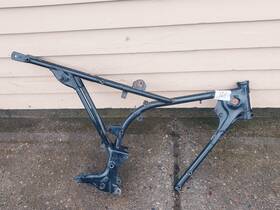
( Part Type: Frame ), ( Color: Black ), ( Vintage Part: Yes ), ( Country Of Origin: Japan ), ( UPC: 241211100033 )
Review YAMAHA Black Frame #241-21110-00-33 fits HS1 HS1B 1970-71
The **Yamaha HS1/HS1B Frame (Part Number: 241-21110-00-33, Model Years: 1970 1971)** is a meticulously crafted, vintage motorcycle frame that embodies the raw, unpolished spirit of Yamaha s early days in the sportbike and racing arena. This frame is the backbone of the legendary **HS1 and HS1B**, Yamaha s first production roadracing bikes, which revolutionized the motorcycle industry by introducing a lightweight, aluminum-alloy frame a radical departure from the traditional steel designs of the era. The HS1/HS1B frame is a masterclass in engineering simplicity, featuring a **double-cradle design** with a central swingarm pivot and a rigid, yet flexible, construction that prioritized weight savings without compromising structural integrity. Weighing in at just **37 pounds (16.8 kg)**, this frame was a game-changer, allowing Yamaha to produce a bike that was not only faster but also more agile and responsive than its competitors, particularly against the dominant Japanese rivals of the time.
Crafted from **high-strength aluminum alloy**, the frame exhibits a sleek, angular silhouette with clean, sharp lines that reflect Yamaha s early aesthetic influences from European and American racing culture. The **top rail and downtube** are integrated into a single, continuous casting, while the **seat rail** extends backward in a minimalist fashion, ensuring a low, aggressive riding position that would become a hallmark of Yamaha s future designs. The frame s **swingarm pivot** is positioned low and slightly rearward, contributing to a shorter wheelbase that enhances maneuverability and cornering stability qualities that made the HS1/HS1B a favorite among racers and enthusiasts alike. The **head tube** is designed to accommodate a **28mm fork** (though later models like the HS2 would adopt a 31mm setup), and the **steering head** is a simple yet robust fork mount, ensuring precise handling.
One of the most distinctive features of this frame is its **modularity and adaptability**, a forward-thinking design choice that allowed Yamaha to easily transition the HS1/HS1B into various configurations, from street-legal models to full-on racers. The frame s **rear subframe** is welded in place, providing a rigid mounting point for the engine and rear suspension, while the **engine cradle** is integrated into the main frame structure, reducing unsprung weight and improving overall rigidity. The **rear suspension eye** is positioned to accommodate a **single-shock setup** (common in the HS1B) or, in later iterations, a more advanced dual-shock configuration. The **engine mounts** are strategically placed to balance the bike s weight distribution, ensuring that the rider remains centered over the wheelbase, a principle that would later define Yamaha s legendary R1 and YZF-R1 designs.
The **HS1/HS1B frame** is not just a piece of history it s a functional, collectible artifact that appeals to both purists and modern tuners. While the original bikes were powered by Yamaha s **250cc parallel-twin engine**, this frame is highly sought after for **restoration projects, custom builds, or even as a basis for modern engine swaps**, such as Yamaha s **R1 or R6 engines**, or even aftermarket units like the **Honda CBR600RR or Kawasaki ZX-6R**. The frame s **clean, uncluttered design** makes it an ideal candidate for minimalist, no-frills builds, while its **durability** ensures it can handle the stresses of modern racing or track days. Whether used in its original form or as the foundation for a custom machine, this frame carries the legacy of Yamaha s bold entry into the world of high-performance motorcycling, proving that innovation and simplicity can coexist in the most exhilarating ways.
For the serious enthusiast or the collector, the **1970 1971 Yamaha HS1/HS1B frame** is more than just a part it s a piece of automotive heritage that bridges the gap between Yamaha s early experimental phase and the brand s later dominance in racing and street performance. Its **lightweight construction, precise geometry, and timeless design** make it a coveted component for those seeking to build a bike that pays homage to the past while embracing the future. Whether you re restoring an original HS1/HS1B or using this frame as the foundation for a modern-day racing machine, its presence on a bike is a testament to Yamaha s pioneering spirit and the enduring appeal of classic Japanese engineering.
The Yamaha HS1/HS1B frame (model number 241-21110-00-33, produced in 1970 71) is a highly sought-after piece of motorcycle history, particularly among vintage enthusiasts. Below is a detailed breakdown of its pros and cons, followed by a conclusion and recommendation.
### **Pros**
1. **Historical Significance and Rarity**
The HS1/HS1B was Yamaha s first production motorcycle, marking the company s entry into the global motorcycle market. These frames are extremely rare, especially in original condition, making them highly collectible. Owning one connects you to a pivotal moment in Yamaha s history.
2. **Iconic Design and Craftsmanship**
The frame is a classic example of 1970s motorcycle engineering, featuring a steel double-cradle design with a clean, functional aesthetic. The build quality reflects the era s attention to detail, with precise welding and machining.
3. **Potential for Restoration or Customization**
Since these frames are often found in various states of disrepair, purchasing one can be a rewarding project for skilled mechanics or restorers. The frame itself is sturdy and can be adapted to modern components, allowing for a unique blend of vintage and contemporary parts.
4. **Community and Enthusiasm**
The HS1/HS1B has a dedicated following among vintage motorcycle enthusiasts. Owning one grants access to a passionate community of collectors, restorers, and riders who share knowledge, parts, and restoration tips.
5. **Investment Potential**
Due to its rarity and historical value, the frame s price tends to appreciate over time, especially if preserved or restored. For serious collectors, it can be a valuable long-term asset.
6. **Engineering Legacy**
The frame s design influenced later Yamaha models, and studying it provides insight into early motorcycle engineering principles. It s a fascinating piece for those interested in mechanical history.
---
### **Cons**
1. **High Cost**
The frame is not cheap, especially in original or restored condition. Prices can range from several thousand to tens of thousands of dollars, depending on provenance, condition, and demand. This makes it a significant financial commitment.
2. **Lack of Modern Practicality**
The frame is designed for a specific era s standards, which may not align with modern expectations for comfort, performance, or safety. Original HS1/HS1B frames were built for simplicity and durability rather than ergonomics or advanced engineering.
3. **Maintenance and Parts Challenges**
Finding original parts or compatible aftermarket components can be difficult. Many modern suppliers do not stock parts for 50-year-old frames, requiring sourcing from specialty vendors or restoration shops. This can add to the cost and complexity of ownership.
4. **Condition and Structural Integrity**
Many frames in circulation have been heavily used, repurposed, or modified over the decades. Rust, bent tubes, or poor welding can compromise the frame s structural integrity. A thorough inspection by a professional is essential before purchase.
5. **Limited Rideability**
While the frame itself can be adapted to modern engines, the original HS1/HS1B was not designed for high performance or long-distance riding. Modern riders may find it uncomfortable or underpowered compared to contemporary motorcycles.
6. **Storage and Transportation**
The frame is heavy and bulky, requiring secure storage to prevent rust or damage. Transporting it may also be cumbersome, especially if it s not yet assembled into a complete motorcycle.
7. **Time and Skill Requirements**
Restoring or even assembling the frame into a rideable motorcycle is a labor-intensive process. It requires mechanical skill, patience, and access to tools, which may not be feasible for casual enthusiasts.
---
### **Conclusion**
The Yamaha HS1/HS1B frame (241-21110-00-33) is a remarkable piece of motorcycle history with undeniable appeal for collectors, restorers, and history buffs. Its pros historical significance, rarity, and potential for appreciation make it a compelling purchase for the right buyer. However, the cons high cost, practical limitations, and the challenges of maintenance mean it is not a practical daily rider s motorcycle. It is best suited for those who prioritize heritage, restoration projects, or investment potential over modern convenience.
### **Recommendation**
Purchase the frame **only if**:- You are a serious collector or restorer with the skills, time, and budget to handle its challenges.
- You have a clear plan for its future, whether as a restoration project, a display piece, or an investment.
- You are prepared to source parts, seek expert advice, and potentially spend additional funds on repairs or modifications.
If you are looking for a **rideable motorcycle**, this frame is not the best choice. However, if you are drawn to its historical value and willing to commit to the process, it can be an incredibly rewarding and valuable addition to your collection. Always conduct a thorough inspection, preferably with a trusted mechanic, and consider consulting the vintage motorcycle community for guidance.
Details:
CAME OFF A 1970 YAMAHA HS1 WITH 6203 MILES. FITMENT: HS1 - 1970 HS1B 1971. BUILD DATE 7/70.
part #: 241211100033 price
- $225.00
specifications mocycfra:
- for models: Hs1, Hs1b
- for makes: Yamaha
- for years: 1970-71
- part type: Frame
- color: Black
- vintage part: Yes
- country of origin: Japan
- upc: 241211100033
seller mocycfra:
- city: Spokane, Washington
- # reviews: 2810
- rating: 100.0%
general mocycfra:
- Motorcycle Scooter Parts Accessories > Body Frame > Frames Parts
- condition: Used
payments mocycfra:
- other
- wallet: Paypal
- credit card: Visa
returns mocycfra:
- policy: Returns Accepted
- time: 30 Days
- paid by: Buyer
shipping mocycfra:
- type: Calculated
- carrier: USPS
- cost: $0.00
- service: USPS Ground Advantage
- class: Standard
- transit: 3-7 Days
offer mocycfra:
- sold: 0
- started: February 16, 2026
- options: Ship-to-home
- quantity: 1
- availability: In Stock
- best offers: True
Yamaha 241-21110-00-33 Is Similar To:
- 02-4703 Ac Racing Black Aluminum Subframe Yamaha Yz (30.3% similar) Sub frame is a direct replacement of the oem. This product is an ac racing black powder coated sub frame for the yamaha YZ125 and YZ250 model years. Sub frame is not bent or damaged. This sub frame is brand new. Sub frame is sold direct from the manufacturer ac racing. Sub frame is coated in a satin...(July 3rd, 2018)
- 031-00250 Lightspeed Carbon Frame Guard Set For Yamaha (26.2% similar) ...(September 16th, 2018)
- 031-00310 Lightspeed Carbon Frame Guard Set For Yamaha (29.5% similar) ...(October 4th, 2018)
- 031-00400 Lightspeed Carbon Frame Guard Set Yamaha (27.1% similar) ...(November 3rd, 2018)
- 031-00560 Lightspeed Carbon Frame Guard Set Fiber For Yamaha (25% similar) ...(September 23rd, 2018)
- 03yz250f Yamaha Subframe Sub Frame Yz (30.5% similar) Many parts from the 03 YZ250F fit other years model's. Free shipping in the USA to lower 48 states. Please see pics for cosmetics as are part of the. All only parts pictured are included in this listing. Therefore, most items are shipped promptly via USPS priority, 1ST class if under 16OZ yamaha ...(November 16th, 2018)
- 0676 Yamaha Vmax Numbered Frame (28.3% similar) This is a brand new yamaha Max numbered frame badge 0676. Its from a 2009 yamaha Max...(September 18th, 2017)
- 1060395 Yamaha Yzf Rear Subframe Back Sub Frame (36.5% similar) Many countries only allow 79 max package length and girth combined. Each part is systematically placed to be easily located once purchased. More options available upon request...(May 1st, 2018)
- 1060937 Yamaha Frame Chassis Slvg Act Miles (23.4% similar) If the item does not fit motorcycle model's specified in listing. Many countries only allow 79 max package length and girth combined. Each part is systematically placed to be easily located once purchased...(May 10th, 2018)
- 1066183 Yamaha Rear Subframe Back Sub Frame (36% similar) More options available upon request. Many countries only allow 79 max package length and girth combined. Each part is systematically placed to be easily located once purchased...(June 2nd, 2018)
- 1066351 Yamaha Star Classic Frame Chassis Ez Regstr Clt (29.3% similar) If the item does not fit motorcycle model's specified in listing. More options available upon request. Each part is systematically placed to be easily located once purchased. Many countries only allow 79 max package length and girth combined...(June 19th, 2018)