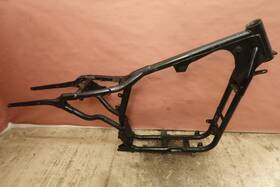
HARLEY-DAVIDSON 1HD4CEM13RY209089 Hugger Frame Chassis O. Salvage
fits model: Xl883, Xlh883. make: Harley. year: 1988–2003.
( Brand: Harley-davidson ), ( Manufacturer Part Number: 1HD4CEM13RY209089 ), ( Part Type: Frame ), ( Country Of Origin: United States )
Review HARLEY DAVIDSON Hugger Main Frame Chassis. Salvage fits XL883 XLH883 1988–2003
The **Harley-Davidson 1HD4CEM13RY209089 (1988 2003 XL883/XLH883 "Hugger") frame and chassis salvage** represents a rare and highly sought-after piece of classic American motorcycle heritage, embodying the spirit of Harley-Davidson s iconic cruiser lineage while offering a unique opportunity for restoration enthusiasts and custom builders. This frame, identified by its **1HD4CEM13RY209089 serial number**, corresponds to the **XL883/XLH883 "Hugger"** model, a compact yet muscular twin-cylinder cruiser produced between 1988 and 2003. The Hugger was designed as a lighter, more maneuverable alternative to Harley s full-size bikes, featuring a **45-degree V-twin engine** (the same 883cc powerplant found in the Sportster lineup) paired with a **dual-swingarm rear suspension**, a **single-disc front brake**, and a **low-slung, aggressive riding position** that made it a favorite among riders seeking a balance of style, agility, and Harley-Davidson s signature growl. The frame itself is a **steel, double-cradle design**, built to withstand the rigors of long-distance touring while maintaining the Hugger s nimble handling an engineering feat that has earned it a cult following among customizers and restorers.
What sets this particular frame apart is its **salvage status**, meaning it has been carefully removed from a decommissioned or non-running motorcycle, allowing for a clean, unrestored base for a builder to work with. The frame retains its original **welded construction**, including the **engine mounts, swingarm pivots, and footpeg brackets**, all of which are critical for maintaining the bike s original character while accommodating modern upgrades. The **serial number 1HD4CEM13RY209089** confirms its authenticity and places it within the **1990s production run**, a period when Harley-Davidson refined its manufacturing processes while retaining the Hugger s classic silhouette. The frame s **chassis number** (likely embedded in the frame rail) ensures traceability, making it a valuable asset for those looking to preserve or reinterpret the Hugger s legacy.
For custom builders, this frame offers an **endless canvas** for creativity. The Hugger s **short wheelbase and low center of gravity** make it an ideal platform for chopper-style modifications, bobber builds, or even a modernized touring rig with aftermarket suspension and ergonomics. The **dual-swingarm design** allows for easy adjustments to wheelbase length, while the **steel frame s robustness** ensures durability even with aggressive modifications. Restoration enthusiasts, meanwhile, will appreciate the frame s **historical significance**, as the Hugger was one of Harley-Davidson s most accessible bikes during its era, appealing to a broad audience of riders from suburban commuters to weekend cruisers. The **1988 2003 production span** also means this frame could have been part of a variety of configurations, including early models with **round headlights** or later iterations with **angular fairing mounts**, adding to its versatility.
Beyond its mechanical appeal, the **Hugger s cultural impact** cannot be overstated. As one of Harley-Davidson s most recognizable compact cruisers, it played a key role in popularizing the idea of a "Harley for everyone," bridging the gap between the brand s traditional touring bikes and the growing demand for lighter, more agile motorcycles. The frame s salvage condition removes the guesswork of sourcing a complete bike, allowing buyers to focus on their vision whether that s a **fully restored period-correct Hugger**, a **modernized chopper with a custom paint scheme**, or a **hybrid build** blending vintage aesthetics with contemporary performance. With its **timeless design, mechanical integrity, and deep-rooted Harley heritage**, this frame and chassis salvage is more than just a part it s a piece of motorcycle history waiting to be reborn.
### **Pros and Cons of Buying a 1988-2003 Harley-Davidson XL883/XLH883/Hugger (1HD4CEM13RY209089 Frame/Chassis for Salvage)**
#### **Pros**
1. **Classic Design and Nostalgia** The XL883/XLH883 and Hugger models are iconic, offering a retro cruiser aesthetic that appeals to enthusiasts who appreciate Harley s mid- 80s to early- 00s styling. The Hugger s compact frame and upright riding position make it a unique choice for those who prefer a more maneuverable, less intimidating bike.
2. **Proven Reliability (When Well-Maintained)** Harley-Davidson s pushrod V-twin engines from this era, particularly the Evolution series (introduced in 1984), are known for durability if they ve been properly serviced. The XL883/XLH883 uses the **88ci (1,449cc) engine**, which, while not as powerful as modern big twins, is straightforward and repairable.
3. **Lower Cost of Ownership (Compared to Modern Harleys)** Parts for these bikes are widely available and often cheaper than those for newer models. Labor costs for basic maintenance are also lower, making them a budget-friendly option for riders who don t need high performance.
4. **Salvage Frame/Chassis Availability** Purchasing just the frame/chassis (as in your case) allows you to rebuild or restore the bike to your specifications. This is ideal if you re mechanically inclined or have access to a trusted mechanic. You can choose components (engine, transmission, fuel system, etc.) based on condition and budget.
5. **Community and Customization Potential** The XL883/XLH883 and Hugger have a dedicated following, with aftermarket support for modifications, including engine swaps (e.g., to a more modern or larger displacement), custom paint, and ergonomic upgrades. The Hugger s small frame also makes it a popular choice for custom builds.
6. **Lower Insurance and Registration Costs** Older Harleys typically have lower insurance premiums and registration fees compared to modern high-value bikes, making them more affordable to own long-term.
7. **Simpler Mechanics** The pushrod drivetrain and carbureted (or early fuel-injected) systems are easier to diagnose and repair than modern fuel-injected, computer-controlled engines. This can be an advantage for riders who enjoy hands-on maintenance.
---
#### **Cons**
1. **Age and Wear** A 1988-2003 model, even with a salvage frame, will likely have significant wear on the engine, transmission, and drivetrain. The **88ci engine** is known for issues like **valve train wear, cylinder head leaks, and camshaft wear** if not maintained properly. The transmission (a 5-speed in most cases) can also be prone to synchro failure or bearing wear.
2. **Fuel Injection Upgrades May Be Needed** Later models (especially post-1995) may have **EFI (Electronic Fuel Injection)**, which can be finicky and require tuning or upgrades to modern standards. Carbureted models (pre-1995) are simpler but less efficient and may struggle with modern fuel quality.
3. **Riding Position and Comfort** The XL883/XLH883 has a more upright, less aggressive riding position than modern cruisers, which can be comfortable for shorter rides but may feel restrictive for long-distance touring. The Hugger s compact frame is great for city riding but lacks the storage and wind protection of a full cruiser.
4. **Limited Power and Performance** The **88ci engine** produces around **50-60 hp**, which is adequate for casual riding but lacks the torque and power of modern Harley V-twins (e.g., 114ci or 120ci engines). If you re looking for a high-performance bike, this is not the best choice.
5. **Rust and Frame Condition** Harley frames from this era are prone to **rust**, especially in the swingarm, rear subframe, and exhaust mounts. A salvage frame may have hidden rust or structural weaknesses, requiring careful inspection before use.
6. **Emissions and Modern Compliance** Some states have strict emissions regulations that may make it difficult to register or insure an older Harley. A **smog check** or **Dyno tune** may be required, adding to the cost.
7. **Parts Availability for Restoration** While parts are plentiful, some components (e.g., rare OEM parts, specific carburetors, or aftermarket upgrades) can be hard to find or expensive. A full rebuild may require sourcing parts from multiple suppliers.
8. **Resale Value** Unlike newer Harleys, these bikes do not hold their value well. If you plan to sell later, you may not recoup much of your investment, especially if the bike is heavily modified.
---
### **Conclusion**
Buying a **1988-2003 Harley-Davidson XL883/XLH883/Hugger frame/chassis for salvage** can be a rewarding project if you re prepared for the challenges. These bikes offer **nostalgia, customization potential, and lower running costs**, but they also come with **significant wear, potential reliability issues, and higher maintenance demands**.
If you re **mechanically skilled, patient, and willing to invest time in restoration**, this could be a great way to build a unique, personalized Harley. However, if you re looking for a **ready-to-ride, low-maintenance, high-performance bike**, this is not the best choice.
---
### **Recommendation**
1. **If You re Building a Project Bike:**- **Proceed with caution.** Inspect the frame for rust, warping, or structural damage. Consider having a mechanic evaluate the condition before committing.
- **Prioritize the engine and transmission.** If these are in poor shape, budget for a **rebuilt or new engine** (e.g., a **1999 88ci engine** or a **114ci swap** for better performance).
- **Choose components wisely.** If you want a **modernized Hugger**, consider pairing the frame with a **fuel-injected engine** (e.g., from a 2000 XL883) and upgrading the suspension, brakes, and electronics.
- **Join Harley forums** (e.g., **Harley-Davidson Forums, Cycle World, or specific XL883/Hugger groups**) for advice on sourcing parts and common issues.
2. **If You Want a Ready-to-Ride Bike:**- Consider a **newer Harley (2010 ) with a lower mileage** or a **well-documented project bike** from a trusted seller.
- Look for **used but reliable models** like the **2000-2005 XL883** (if you prefer carburetors) or a **2010 Sportster (e.g., 883 or 1200)** for better modern features.
3. **If You re on a Budget:**- A **salvage frame is a good way to save money**, but factor in the **cost of rebuilding** (engine, transmission, fuel system, etc.). Expect to spend **$3,000 $6,000 ** depending on parts quality.
- If you re not comfortable with mechanical work, **hire a shop** to rebuild it, which will increase costs significantly.
**Final Verdict:**- **Buy the salvage frame if** you re passionate about restoring classic Harleys, have mechanical experience, and are okay with a long-term project.
- **Avoid it if** you want a hassle-free, modern cruiser or lack the time/patience for restoration.
Would you like guidance on specific components to prioritize in a rebuild?
Details:
Buyer pays return shipping. Please see ALL pictures for the details. Donor Bike: 1994 HARLEY-DAVIDSON XLH883 HUGGER. All parts should be installed by a licensed mechanic.
Comes with everything seen in the photos. 1988 2003 HARLEY-DAVIDSON XL883 XLH883 HUGGER Main Frame Chassis. Stock Number.
part #: 1hd4cem13ry209089 price
- $849.59
specifications mocycfra:
- for models: Xl883, Xlh883
- for makes: Harley
- for years: 1988-2003
- brand: Harley-davidson
- mpn: 1hd4cem13ry209089
- part type: Frame
- country of origin: United States
returns mocycfra:
- policy: Returns Accepted
- paid by: Seller
- time: 30 Days
offer mocycfra:
- best offers: True
- started: March 6, 2026
- quantity: 1
- availability: In Stock
- options: Ship-to-home
- sold: 0
shipping mocycfra:
- service: Flat Rate Freight
- type: Fixed
- class: Freight
- cost: $0.00
general mocycfra:
- condition: Used
- Motorcycle Scooter Parts Accessories > Body Frame > Frames Parts
seller mocycfra:
- # reviews: 27424
- city: Oregon City, Oregon
- rating: 99.5%
payments mocycfra:
- other
- wallet: Apple-pay
- credit card: Diners-club
Harley-davidson 1HD4CEM13RY209089 Is Similar To:
- 51130-98 Harley-davidson 51130-98 Fx Bucket Style (41% similar) Genuine Harley-davidson. Fits all low tall medallion sissy bar uprights. Does not fit mini sissy bars. Harley davidson, backrest pad...(February 24th, 2017)
- 0000-00 Harley-davidson Oem 1989-1999 Evo (28.9% similar) What you see is get. Does not include any hardware. Please examine images before buying shipping is for lower 48 states. This ad is for all that you see in the images and nothing more. Please carefully examine all pictures for exact condition. Most of the parts I sell are used and its very hard to ...(July 28th, 2017)
- 00000000 Harley-davidson Harley Davidson Softail (34% similar) If you are in the area stop and check us out. I do not end offers early, please bid to what you want pay instead, thanks...(June 6th, 2017)
- 002211194 Avery Paint Protection For Harley Davidson Touring Hard Bag Lids (25.9% similar) Top coated, high gloss finish. Avery Tennyson SPF-xi paint protection film this listing fits I only sell the best clear vinyl on market. Self healing top coat provides excellent scratch scuff resistance. Features: die cut perfectly to fit your harley davidson lid tops. Excellent UV, temperature, ...(March 28th, 2019)
- 02-08 Touring Model Harley-davidson Harley (34% similar) Items is in new like conditions. Chrome is in show quality conditions harley davidson touring swing arm road king,Electra glide, ultra. Has not been install since being chrome...(September 2nd, 2017)
- 027586 Unbranded Harley Davidson Street Swing Arm Chain Guard Swingarm (35.4% similar) ...(November 3rd, 2018)
- 0280201 Replica Rigid Frame Fits Harley Davidson (27.7% similar) Threads are for bolt set VT top of gas tank screw kit cadmium. Note: battery box tab is sold as: each country of origin: imported VT no: this part cross references to oem 37N fits the following bike applications Harley-davidson whl unit measure: 1 - ea 2017 catalog pages: 818. Don't forget the pre...(September 1st, 2018)
- 03-656 Arlen Ness Chrome Frame Grill Harley Davidson Flt (19.2% similar) Adds 10-GAUGE to the front frame section and in result takes eyes away from unfinished looking areas of. Fits: harley davidson flt note: does not fit 2014 -UP liquid cooled flt cu,CV model's. Many matching 10-GAUGE styled accessories available for flt model's. All given by adrenaline Junker as to ...(October 1st, 2018)
- 0504-0230 Drag Specialties Harley-davidson Satin (30.2% similar) Merchandise must be in new condition with all packaging, manuals, tags, and paperwork intact unaltered...(November 19th, 2017)
- 1051631 Harley-davidson 1997 Road King (34.9% similar) Many countries only allow 79 max package length and girth combined. More options available upon request. If the item does not fit motorcycle model's specified in listing. Each part is systematically placed to be easily located once purchased...(January 27th, 2018)
- 1051994 Harley-davidson 2015 Street 750 (33.3% similar) Many countries only allow 79 max package length and girth combined. More options available upon request. If the item does not fit motorcycle model's specified in listing. Each part is systematically placed to be easily located once purchased...(January 27th, 2018)